


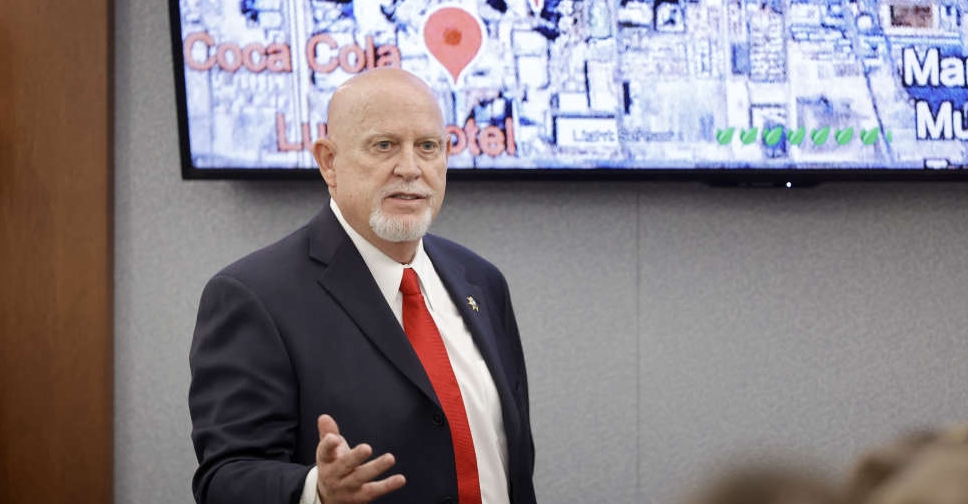
A former Las Vegas police detective has told jurors on Thursday he could not corroborate the story of an ex-gang leader who said he was involved in the drive-by killing of Tupac Shakur but now denies being responsible for the shooting.
Duane "Keffe D" Davis, 63, is charged in Nevada's Clark County with a single count of murder using a deadly weapon. He has pleaded not guilty. Davis is accused of leading a group of men to kill Shakur, 25, who was one of rap's most commercially successful and influential artists, in a drive-by shooting near the Las Vegas Strip.
The case rests almost entirely on Davis' public and private statements that he was in the car with Shakur's killer and passed him the gun. Davis' lawyer, Michael Sanft, told jurors during opening statements these statements were mere bravado and could not be backed up with evidence.
On Thursday, Sanft called to the stand a former Las Vegas Metropolitan Police Department homicide detective who interviewed Davis in 2009. Dan Long said he believed what Davis said but conceded he could not verify his statements.
"I wasn't able to verify any of that," Long said.
Sanft rested his case on Thursday, and Davis did not testify. Closing arguments are set for Monday.
The defense’s strategy rests on impugning Davis’ credibility while convincing jurors that his stories were mere bravado. It is a risky strategy, but Davis’ self-incrimination leaves him little choice.
Over the past two weeks, prosecutors from the Clark County District Attorney’s Office played hours of recordings for jurors, including public interviews and secret meetings with investigators, where Davis said he was enraged after Shakur and his entourage beat up Davis’ nephew at a Las Vegas casino on September 7, 1996.
Davis and three other men, including his nephew, went looking for Shakur and his record producer, Marion “Suge” Knight, in a white Cadillac on the night of the beating, he said.
Davis said he passed a gun to the backseat, and when they found Knight and Shakur’s car, one of the two men in the back opened fire.
Prosecutors have not named the shooter, and the three other men in the car have since died. Under Nevada law, Davis can be charged with murder even though he did not pull the trigger.
Davis was a leader of the Southside Compton Crips, a Los Angeles-area street gang that feuded with rival gang Mob Piru, which was associated with Shakur and his record label Death Row Records.
Shakur's killing in 1996 became a seminal moment in rap history and heightened hip-hop culture's violent image during “gangsta” rap’s heyday, an era defined by feuding between East and West Coast artists.

 Tate brothers to remain in US jail pending judge's ruling
 Dubai showcases growing gaming sector at Gamescom
 'Practical Magic 2' returns to celebrate sisterhood, pass the baton
 The Script, The Chainsmokers to perform at Abu Dhabi Grand Prix