


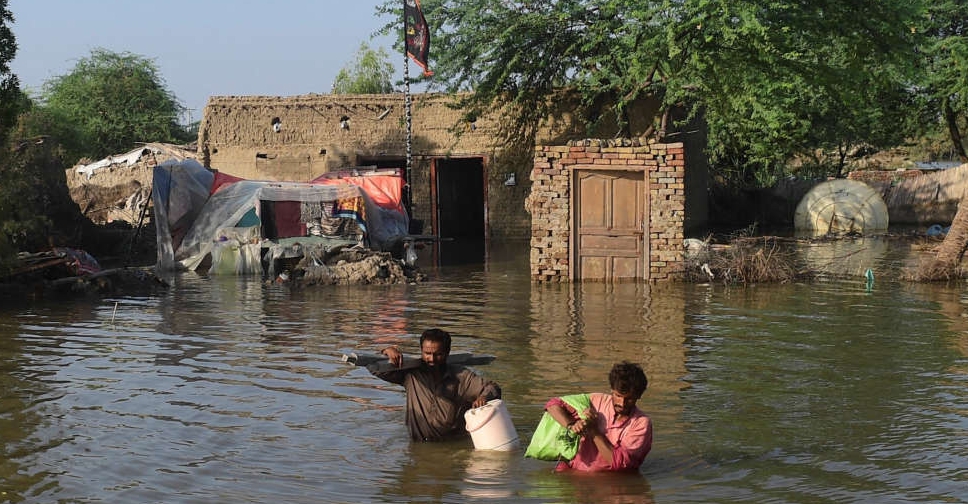
International aid agencies struggling to help hundreds of thousands of people displaced by deadly floods in Pakistan have asked for the loosening of restrictions on imports of food from Pakistan's old rival India.
Unusually heavy monsoon rains have triggered floods that have submerged a third of Pakistan and killed more than 1,100 people, including 380 children. The United Nations has appealed for $160 million to help with it termed as an "unprecedented climate catastrophe".
Pakistan faces surging food prices, compounding the misery for the millions of people affected by the disaster.
Finance Minister Miftah Ismail said the government was considering loosening restrictions on the largely closed border with India to enable supplies of vegetables and other food to come in.
"More than one international agency has approached the government to allow them to bring food items from India through the land border," Ismail said in a post on Twitter on Wednesday.
"The government will take the decision to allow imports or not based on supply shortage position, after consulting its coalition partners and key stakeholders."
REFUGE ON ROADS
Pakistan has received nearly 190 per cent more rain than the 30-year average in the quarter through August this year, totalling 390.7 millimetres. Sindh province in the south, with a population of 50 million, was hardest hit, getting 466 per cent more rain than the 30-year average.
Flash floods surging out of northern mountains have swept away homes, businesses, infrastructure and crops. The government says 33 million people, or 15 per cent of the 220 million-strong South Asian nation, have been affected.
Army helicopters have been busy plucking stranded families from rooftops and patches of dry land and dropping food in inaccessible areas.
Colossal volumes of water are pouring into the Indus river, which flows down the middle of the country from its northern peaks to southern plains, bringing flooding along its length.
Villager Fayyaz Ali, 27, in hard-hit Shikarpur district of Sindh province, has managed to get his family to safety but has little hope of saving his small home surrounded by flood waters.
"The house is going to fall at any moment. It's inundated," Ali told Reuters.
Like many villagers, Ali said he had yet to receive any help.
Huge tracts of land on both sides of the Indus are submerged.
Main roads raised above the fields have become a refuge where people with their bundles of belongings try to shelter from the sun and rain under plastic. Farm animals seek safety with their owners.
Early estimates have put the flood damage at more than$10 billion, the government said. It has appealed to the world to help with the effects of what it has called a man-made climate catastrophe.


 Iran names new supreme leader
 Indonesia searches for five missing after landfill collapse kills four
 GCC permanent representatives meet UN chief
 Qatar arrests 313 individuals for spreading misinformation