


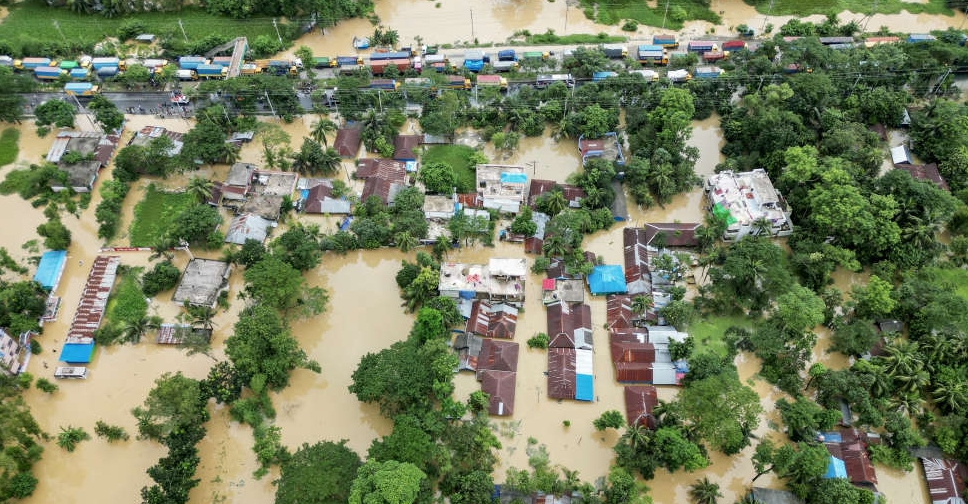
Floods in Bangladesh have destroyed an estimated 1.1 million tonnes of rice, according to data from the agriculture ministry, prompting the country to ramp up imports of the staple grain amid soaring food prices.
Floods brought by heavy monsoon rains and torrential upstream runoff struck the country in two major waves in August and October, claiming at least 75 lives and affecting millions, particularly in the eastern and northern regions where crop damage has been the most severe.
The agriculture ministry said this year's flooding has resulted in a substantial loss of rice production. In response, the government is moving quickly to import 500,000 tons of rice and is expected to permit private sector imports soon, a food ministry official said.
The interim government, which took power in August after deadly protests forced former Prime Minister Sheikh Hasina to flee to India, has been struggling to stabilize food prices that have surged nearly 20 per cent in recent months.
Higher imports by Bangladesh could lift shipments from neighbouring India, the top global rice exporter, which last month cut the duty on parboiled rice exports to 10 per cent.
The floods have also severely impacted other agricultural products, including more than 200,000 tons of vegetables. Total nationwide agricultural losses due to the flooding are estimated at around 45 billion taka ($380 million).
Bangladesh, the world's third-largest rice producer, typically produces nearly 40 million tonnes of rice a year to feed its population of 170 million. However, natural disasters often disrupt production and lead to increased dependency on imports.
The floods this year have underscored Bangladesh's vulnerability to climate change. A 2015 World Bank Institute analysis estimated 3.5 million people in Bangladesh are at risk of annual river flooding, a risk scientists say is worsening due to global climate change.
"To ensure food security in the face of increasing climate challenges, it is essential to develop more flood- and drought-tolerant crop varieties, along with short-duration varieties," said Khandakar Mohammad Iftekharuddaula, chief scientific officer at the Bangladesh Rice Research Institute.
He said investing in agricultural research is crucial for developing these resilient crops.
"By focusing on flood, and drought-resistant traits, we can help farmers adapt to changing weather patterns and stabilize yields even in difficult conditions."

 Four Bahrainis arrested for espionage activities with Iranian Guard
 Six vessels attacked in Gulf, Strait of Hormuz
 IEA announces record oil stockpile release over Iran war supply disruptions
 UN Security Council adopts resolution condemning Iran attacks on Gulf states