

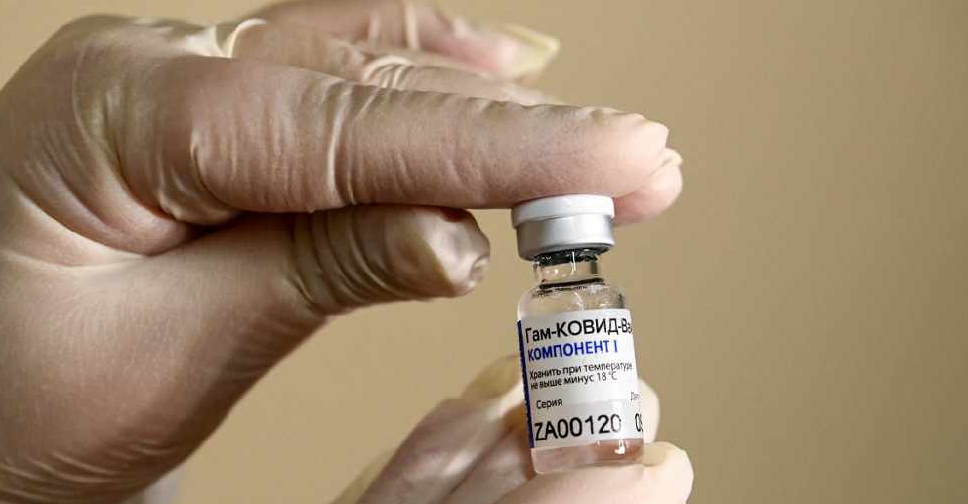
Moscow began distributing the Sputnik V COVID-19 shot via 70 clinics on Saturday, marking Russia's first mass vaccination against the disease.
Moscow's coronavirus task force said the Russian-made vaccine would first be made available to doctors and other medical workers, teachers and social workers because they ran the highest risk of exposure to the disease.
"You are working at an educational institution and have top-priority for the COVID-19 vaccine, free of charge," read a phone text message received by one Muscovite, an elementary school teacher, early on Saturday and seen by Reuters.
Moscow, the epicentre of Russia's coronavirus outbreak, registered 7,993 new cases overnight, up from 6,868 a day before and well above the daily tallies of around 700 seen in early September.
"Over the first five hours, 5,000 people signed up for the jab - teachers, doctors, social workers, those who are today risking their health and lives the most," Mayor Sergei Sobyanin wrote on his personal website on Friday.
The age for those receiving shots is capped at 60. People with certain underlying health conditions, pregnant women and those who have had a respiratory illness for the past two weeks are barred from vaccination.
Russia has developed two COVID-19 vaccines, Sputnik V which is backed by the Russian Direct Investment Fund and another developed by Siberia's Vector Institute, with final trials for both yet to be completed.
The Sputnik V vaccine is administered in two injections, with the second dose is expected to be given 21 days after the first.
Moscow closed down all public places including parks and cafes, with exception for delivery, in late March, with police patrolling the streets looking for those violating the rules. Restrictions were eased from mid-June, however.
Russia as a whole reported 28,782 new infections on Saturday, its highest daily tally, pushing the national total to 2,431,731, the fourth-highest in the world.
In October, certain restrictions such as remote learning for some secondary school children and a 30 per cent limit on the number of workers allowed in offices were introduced again.


 Trump says Iran could be 'taken out' on Tuesday
 Iran rejects ceasefire as Trump's warning nears deadline
 UN urges all parties to protect civilian infrastructure, uphold international law
 Artemis moon mission breaks record for furthest human spaceflight