Ukrainian Presidential Chief of Staff Andriy Yermak/ AFP
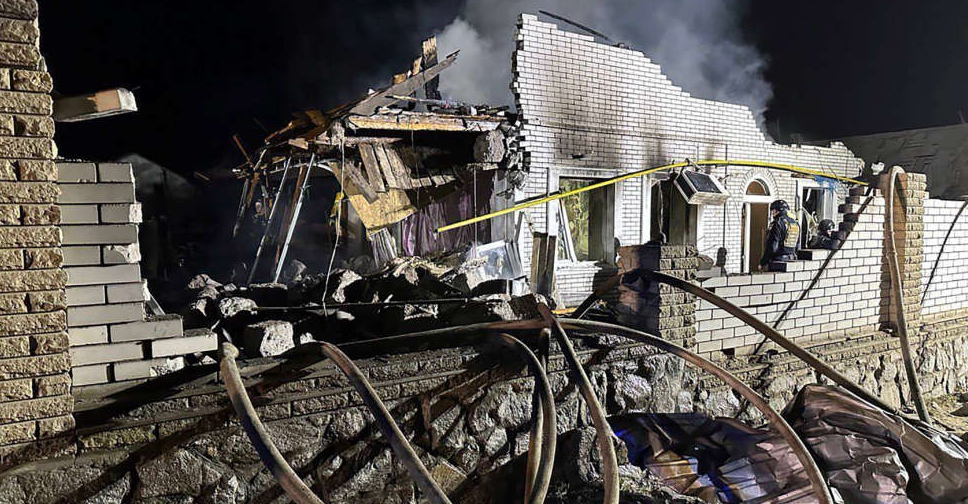
A 50-year-old man and his 11-year-old daughter were killed after Russian forces struck a residential building in the southeastern Ukrainian city of Zaporizhzhia early on Sunday, authorities said.
Ukraine's State Emergency service also reported that a 46-year-old woman, who it identified as the wife and mother of the victims, was pulled from the wreckage.
City council secretary Anatoliy Kurtev said two missiles had destroyed one building and damaged dozens of others during the overnight strike.
Rescuers dug through heaps of concrete and other debris on Sunday morning amid the renewed wail of air-raid sirens.
Blasted-out walls revealed the charred remains of the family's living room, where a television stood smashed and shattered wall cabinets were still hanging.
A body, which local residents said was that of the man killed, was wrapped in a blanket nearby.
Regional governor Yuriy Malashko told Reuters the injured woman was taken to a hospital and was in serious condition.
The strike was the latest in a series of recent attacks on civilian targets in the region as Moscow's full-scale invasion drags into its second year.
Russia's defence ministry claimed on Sunday it had destroyed a depot containing 70,000 tonnes of fuel near Zaporizhzhia as well as Ukrainian military warehouses in the Donetsk and Zaporizhzhia regions.
US President Donald Trump on Monday told reporters that Iran could be taken out in one night, "and that night might be tomorrow night," warning Tehran it had to make a deal by Tuesday night or face wider bombing raids.
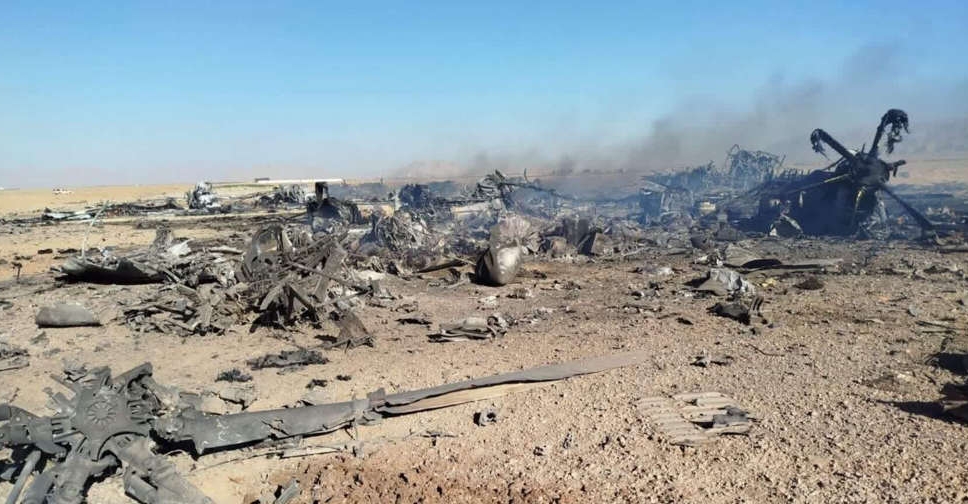
Iran said on Monday it wanted a lasting end to the war with the US and Israel, and pushed back against pressure to swiftly reopen the Strait of Hormuz under a temporary ceasefire.
The United Nations has renewed its call for all parties to the conflict in the Middle East to comply with international law regarding the conduct of hostilities, emphasising that civilian infrastructure must not be targeted.
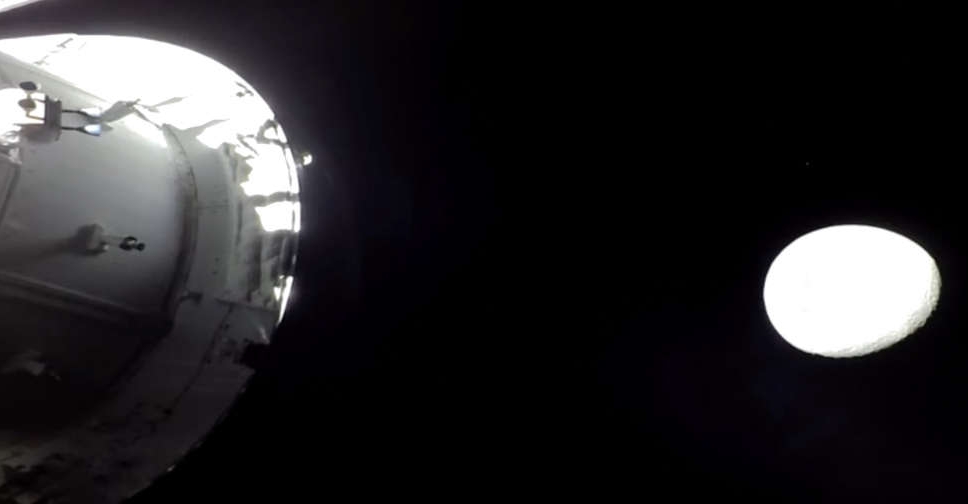
The four astronauts of NASA's Artemis II mission cruised on Monday to the deepest point in space reached by any human, following the tug of lunar gravitational force en route to a rare crewed flyby over the shadowed far side of the moon.
As the climactic six-hour flyby of Earth's only natural satellite got underway, some two dozen lunar scientists packed a room adjacent to mission control at NASA's Johnson Space Center in Houston to record the astronauts' first observations of the moon's surface in real time.
The Artemis II crew, riding in their Orion capsule since launching from Florida





 Trump says Iran could be 'taken out' on Tuesday
 Iran rejects ceasefire as Trump's warning nears deadline
 UN urges all parties to protect civilian infrastructure, uphold international law
 Artemis moon mission breaks record for furthest human spaceflight