


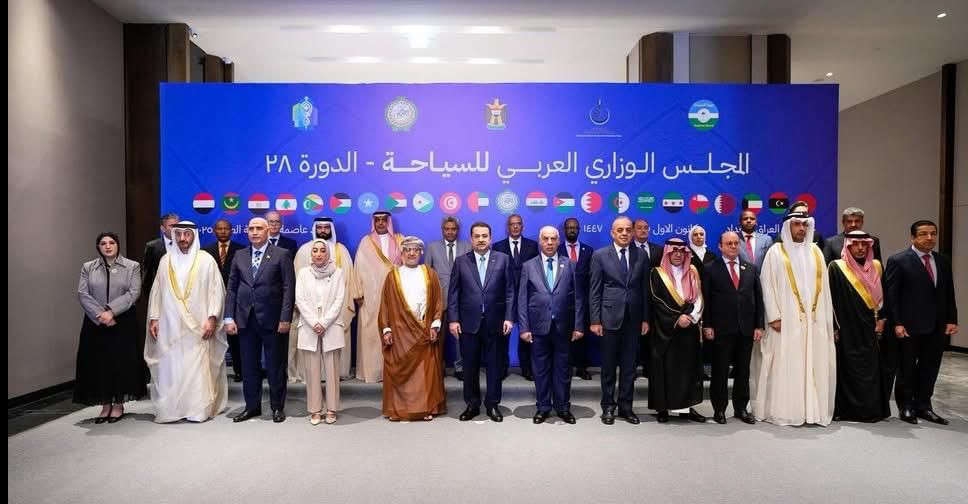
Al Ain has been named the “Capital of Arab Tourism 2026” by the Arab Ministerial Council for Tourism during its 28th session in Baghdad, Iraq.
The announcement was made during the participation of a high-level UAE delegation led by Abdullah Ahmed Al Saleh, Undersecretary of the Ministry of Economy and Tourism, representing Abdulla bin Touq Al Marri, Minister of Economy and Tourism.
The selection highlights the growing international appeal and competitiveness of the UAE’s tourism ecosystem, reaffirming Al Ain’s position as a premier heritage and cultural destination.
Commenting on the announcement, Bin Touq said, “Being named the Capital of Arab Tourism for 2026 is a significant milestone for the UAE. It reflects the qualitative progress achieved through our leadership’s strategic vision, which recognised early the importance of investing in tourism as a driver of future economic growth. This recognition further strengthens the UAE’s standing on the global tourism map.”
He added that this achievement supports the goals of the UAE Tourism Strategy 2031, aimed at strengthening the national tourism identity, attracting 40 million hotel guests annually, and increasing the sector’s contribution to GDP to AED450 billion by 2031.
“We remain committed to building a more diversified and sustainable tourism ecosystem - driven by innovation, service excellence, and strong public-private partnerships,” Bin Touq said.
Saleh Mohamed Al Geziry, Director-General of Tourism at the Department of Culture and Tourism - Abu Dhabi, said, “The selection of Al Ain as the Arab Tourism Capital for 2026 reflects its rich heritage, inspiring cultural sites, and exceptional natural landmarks, which solidify its position as a unique regional and global destination.
“This achievement gives us an additional boost to move forward in achieving our mission to build an integrated tourism ecosystem in the Al Ain region by deepening our local and international partnerships and enhancing our investments in diverse experiences that combine authenticity and innovation. It also enables us to enrich the lives of community members and visitors alike, open new horizons for youth empowerment, and support sustainable development in line with the Abu Dhabi Tourism Strategy 2030,” he added.
The UAE’s tourism sector continues to lead on regional and global fronts. Recent achievements include the election of Shaikha Nasser Al Nowais as Secretary-General of UN Tourism for the 2026-2029 term, and the recognition of Masfout village in Ajman as the ‘Best Tourism Village in the World’ for 2025.
The sector also recorded a rise in the number of hotel guests, tourism revenues, and investment inflows. In 2024, tourism contributed AED257.3 billion to GDP, representing 13 percent of the national economy.
In his remarks during the Council meeting, Al Saleh reaffirmed the UAE’s commitment to enhancing Arab cooperation, noting that global shifts in the sector require unified efforts to build an integrated ecosystem capable of navigating future trends. He emphasised that tourism remains a key pillar for sustainable development, wide regional prosperity, and cultural dialogue.
During the session, Council members congratulated the UAE on the election of Shaikha Nasser Al Nowais as Secretary-General of UN Tourism (2026-2029), affirming that this achievement reflects the UAE’s advanced position on the global tourism map and its active role in supporting the sector regionally and internationally.
The meeting addressed key priorities, such as advancing sustainable tourism in the region, boosting intra-Arab tourism, and supporting tourism innovation and digital transformation. It also discussed smart tourism initiatives to improve visitor experiences, accessible tourism for people of determination, cultural heritage protection, and developing tourism statistics to support decision-making.
The Council further explored enhancing cooperation in medical tourism, developing joint tourism products, and exchanging expertise to elevate industry standards and unify training and capacity-building efforts.
The session concluded with a review of initiatives to promote Arab destinations and highlight the region’s rich cultural and historical assets, positioning them as leading destinations on the global tourism map.

 UAE calls for end to crisis in Sudan at Quad meeting in New York
 Sheikh Abdullah discusses strategic ties with US Secretary Marco Rubio
 UAE pledges $1.2 billion to support Gaza through Board of Peace
 Road closures announced in Dubai for UAE Tour 2026